
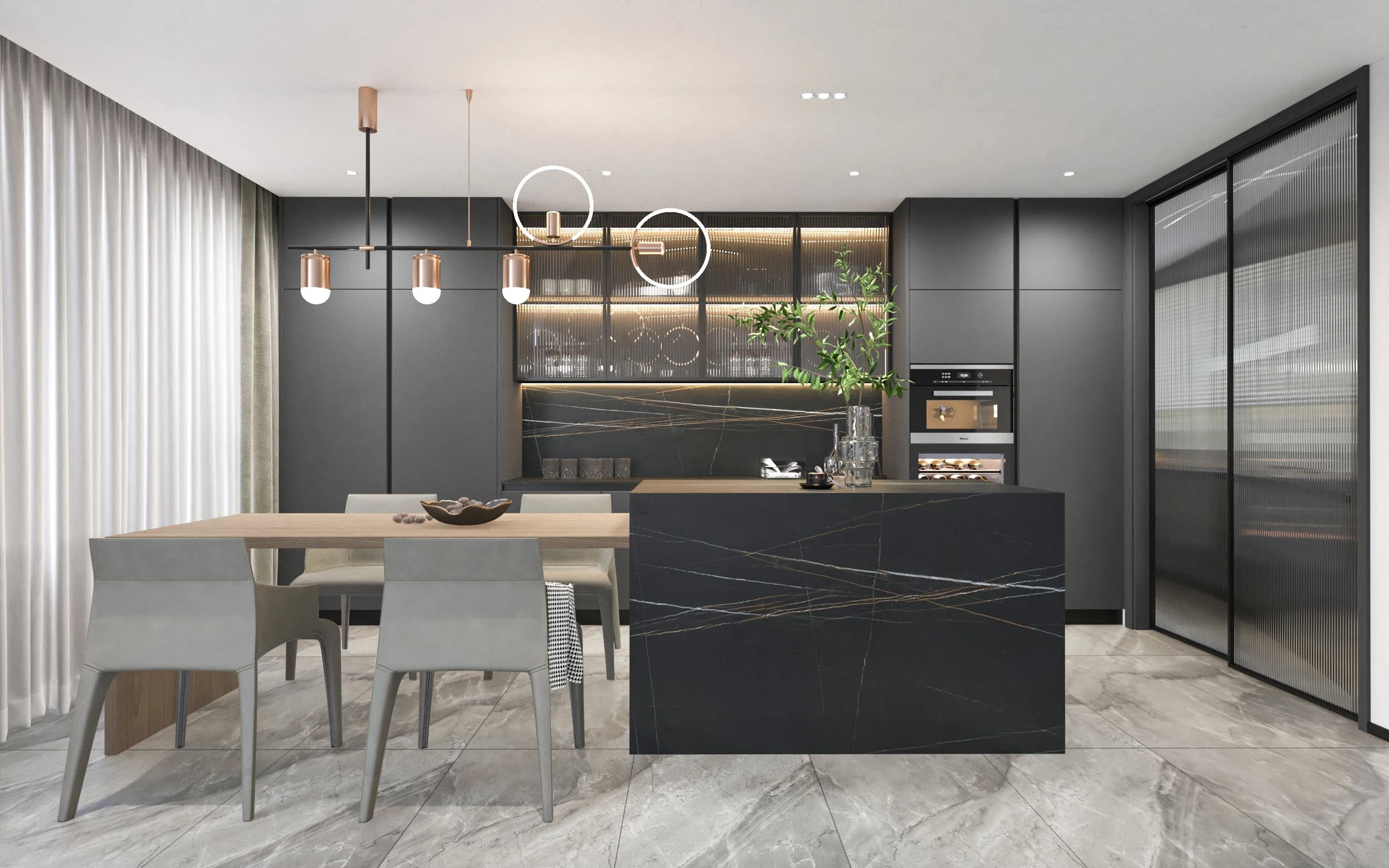
Minimalism in kitchen design isn't about removing everything — it's about keeping only what matters and making it look effortless. Done well, a minimalist kitchen is calm, functional, and surprisingly livable. Done poorly, it can feel sparse and uninviting. The difference is in the details.
The Core Characteristics of a Minimalist Kitchen
Flat-panel or slab cabinet doors are the foundation. No raised panels, no visible frame, no decorative routing. The door surface is the statement.
Handle-free design is the natural extension. Push-to-open mechanisms, integrated finger pulls, or recessed channels eliminate the visual noise of knobs and bars.
A restrained color palette — typically white, off-white, light grey, or warm greige — keeps the eye moving smoothly across surfaces without interruption. Occasional deep tones (charcoal, navy, black) work as anchors, not accents.
Integrated appliances disappear behind cabinet panels. The refrigerator, dishwasher, and sometimes even the range hood become part of the cabinet run rather than standalone objects.
Continuous surfaces with minimal interruption. Long countertop runs, full-height backsplashes in the same material as the counter, and flush-mounted sinks all contribute to visual continuity.
Hidden storage is essential. Everything has a home behind closed doors. Open shelving, if used at all, is sparse and intentional.
Why It Works
The minimalist kitchen reduces decision fatigue. When visual complexity is low, the space feels larger, calmer, and easier to maintain. Cleaning is faster — fewer crevices, fewer edges, fewer places for grease and dust to accumulate.
It also ages exceptionally well. A well-executed flat-panel kitchen in white or warm grey will look as relevant in 15 years as it does today.
The Risk: Cold and Impersonal
The most common failure mode in minimalist kitchens is a space that feels institutional rather than residential. The solution is warmth — introduced through:
- Natural wood accents: a wood-toned island base, open shelves in oak or walnut, or a wood countertop section
- Texture: a honed stone countertop, a lightly textured backsplash tile, or a matte cabinet finish instead of high-gloss
- Plants and objects: a single bowl of fruit, a potted herb, or a pendant light with visible warmth
The goal is restraint, not emptiness.
Hardware Choices in a Minimalist Kitchen
If you choose visible hardware (rather than push-to-open), keep it simple and consistent. Thin bar pulls in matte black, brushed steel, or brushed gold — all the same finish, all the same size. Mixing hardware styles breaks the visual quiet that defines the style.
Minimalism at Jasen Cabinetry
Our high-gloss white and grey lacquer lines, as well as our flat-panel melamine options, are designed for exactly this aesthetic. Our team can help you plan a layout that maximizes visual calm while keeping the space practical for daily use. Book a consultation and bring inspiration images — we'll help translate them into a real kitchen.