
Walk into any kitchen showroom today and you'll see two styles dominating the floor: the Slim Shaker and the flat panel. Both are clean, contemporary, and widely popular — but they're not interchangeable. Understanding the subtle but significant differences between them will help you make a decision you'll be happy with for years.
What Is the Slim Shaker?
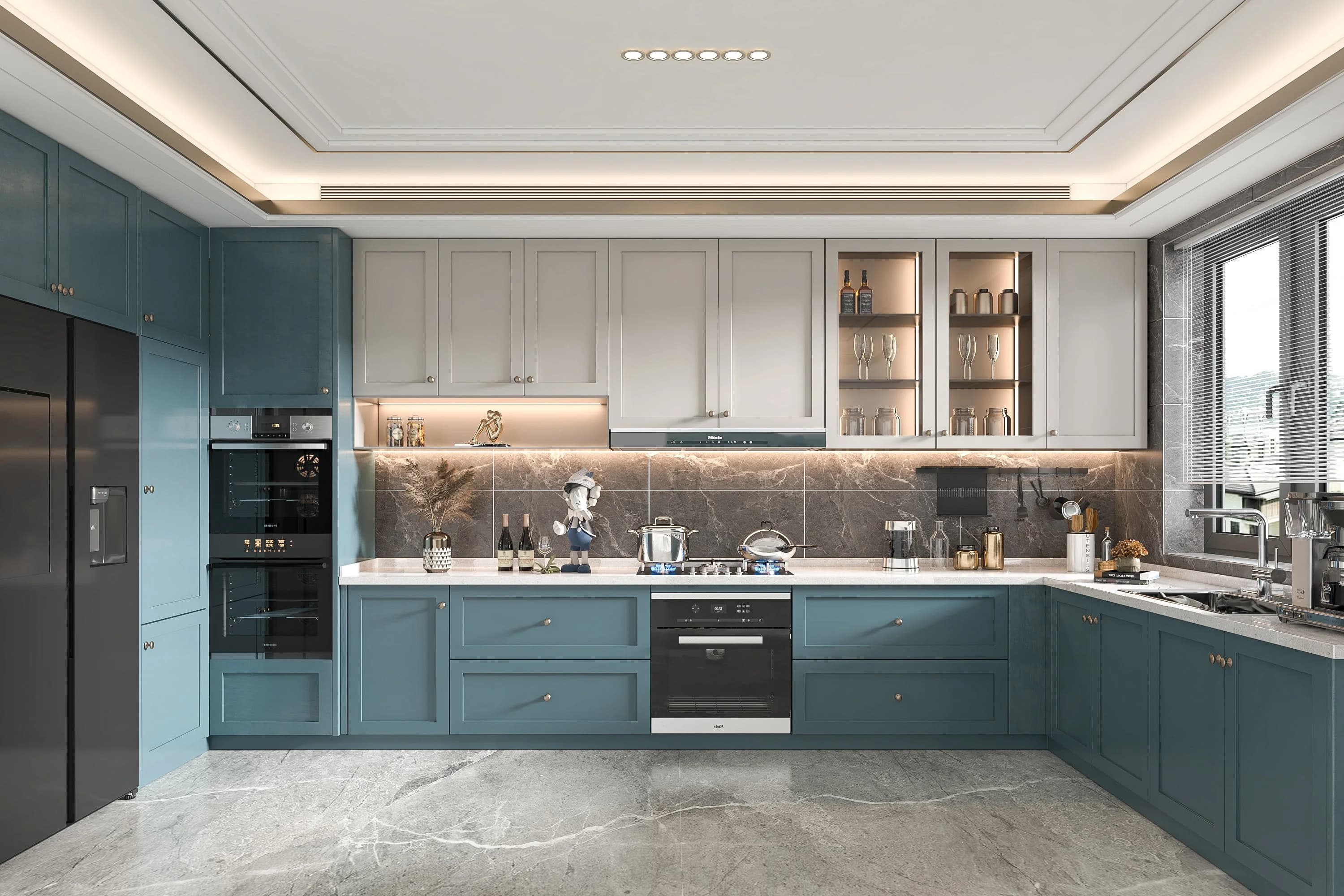
The Slim Shaker is a refined evolution of the classic 5-piece Shaker door. It retains the defining feature — a recessed center panel surrounded by a frame — but makes the frame profile much thinner and tighter. The result is a door that reads as modern from a distance but has the depth and craftsmanship of a traditional Shaker up close.
Key characteristics: - Narrow stile and rail (the frame around the panel) - Shallow or flat recessed center panel - Available in painted, wood-grain, or veneer finishes - Works with visible hardware (knobs, bar pulls) or integrated grip channels
What Is Flat Panel?
The flat panel (also called slab door) is exactly what it sounds like: a single, uninterrupted flat surface with no frame, no recess, and no detail. The door is one piece. It's the purest expression of modern cabinetry.
Key characteristics: - Completely flat, no frame or panel detail - High-gloss, matte lacquer, or wood-grain finishes - Typically used with handleless designs (push-to-open or integrated pull) - Strong, graphic visual impact
How They Feel in a Space
Slim Shaker adds warmth and subtle texture. The shadow line created by the recessed panel catches light differently at different times of day, giving the kitchen a lived-in quality. It works especially well in transitional and classic-leaning homes where some architectural detail is expected.
Flat panel is quieter and more graphic. It recedes visually, making the countertop, backsplash, and overall form of the kitchen the focus. It suits ultra-modern spaces, open-plan living areas, and homeowners who want the kitchen to feel clean and almost invisible.
Which Works Best in Montreal Homes?
Montreal's housing stock is diverse — Victorian duplexes, 1960s bungalows, modern condos, new suburban builds. Here's a general guide:
- Older homes with architectural character: Slim Shaker respects the bones of the building
- Modern condos and new builds: Flat panel feels native to the space
- Open-plan homes: Either works — flat panel for drama, Slim Shaker for warmth
- Rental or investment properties: Slim Shaker in white is the safest, most broadly appealing choice
The Budget Question
Both styles are available across a wide range of price points. In our line at Jasen Cabinetry:
- Slim Shaker in painted MDF is our most popular entry-level option — great quality, accessible price
- Flat panel in high-gloss lacquer sits at the higher end due to the finishing process
- Wood-grain flat panel (oak, walnut) falls between the two
Neither style is inherently more expensive — it depends on the finish and construction method.
Can You Mix Both?
Yes, and it's a growing trend. A flat-panel island paired with Slim Shaker perimeter cabinets creates visual hierarchy and breaks up large kitchen runs. The key is keeping colors and finishes cohesive so the mix reads as intentional rather than indecisive.
If you're unsure which direction suits your home, our team can show you door samples in your actual space. Contact us to arrange a consultation.